
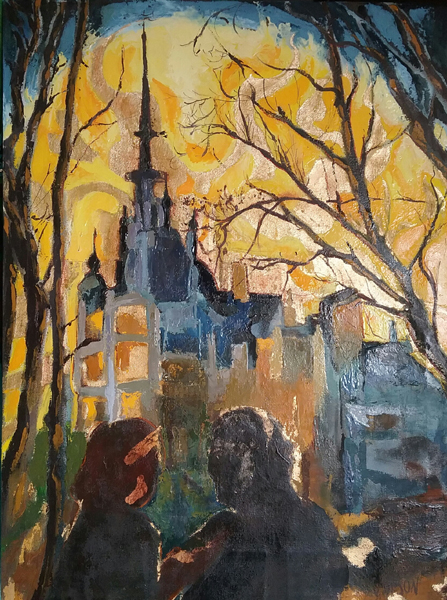
I start with stretcher bars.
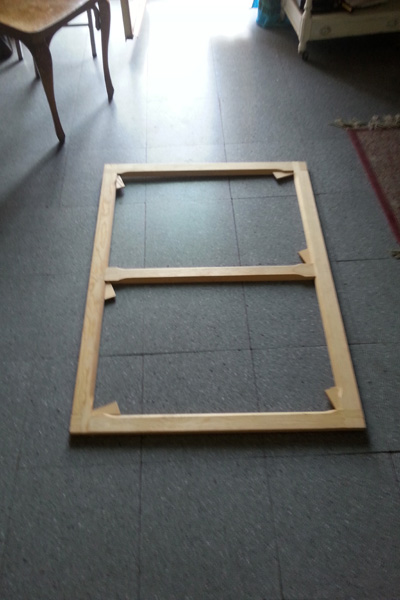
73 cm x 100 cm or 28.74 in x 39.37 in
I’m using duck cloth. It’s heavy, plain woven cotton fabric.
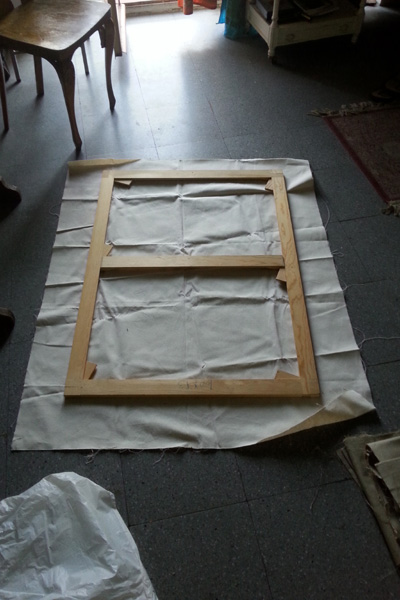
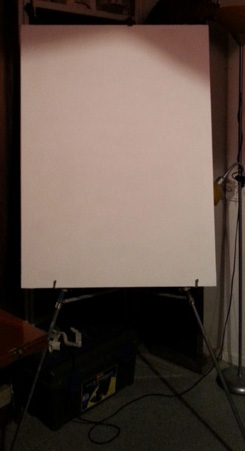
I mounted the material on the stretcher bars, gave it a thin coat of rabbit skin glue (let it dry) and then I primed it. Primer: Mix equal amounts of zinc oxide, calcium sulfate and rabbit skin glue. Pour the rabbit skin glue into the zinc oxide and calcium sulfate little by little mixing with a brush.

Here is the primed canvas on the easel.
Egg tempera emulsion is made by mixing an egg, oil, varnish and water together in a tall flask of equal proportions, shaking after each ingredient in that respective order.
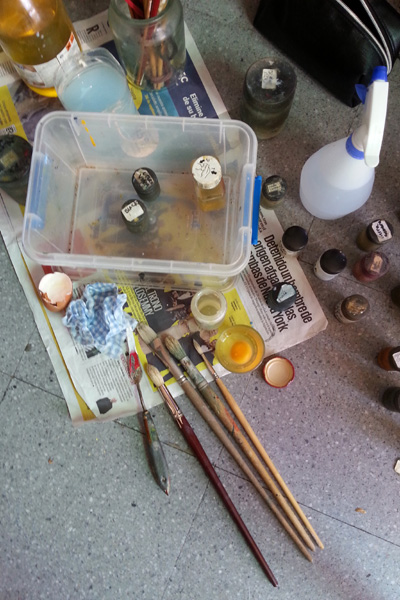
I started off using these earth colors: blanco de España, zinc oxide, verde Veronese, transparent gold ocher and vine black.

This is what the pigments look like when mixed with the emulsion. This is a water based medium.
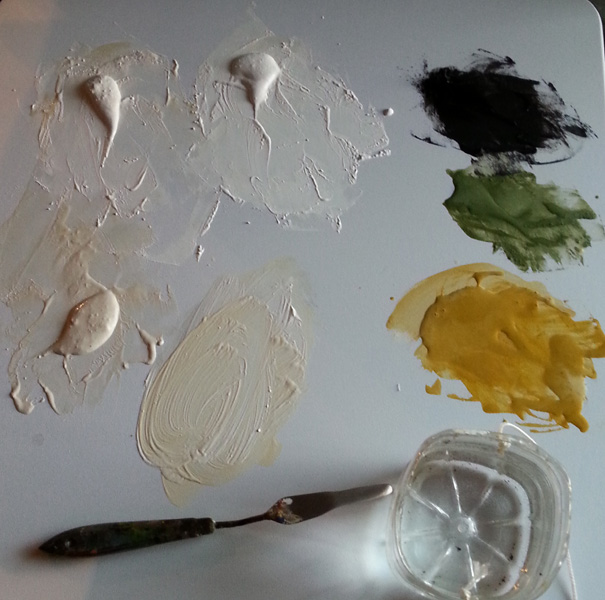
Egg tempera can be watered down as thinly as you like, but not always as thick as you like.

I start adding color and still painting thinly.
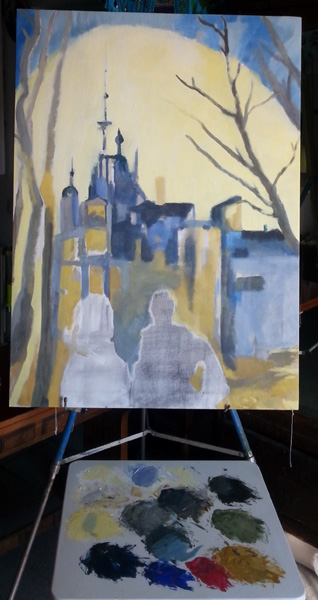
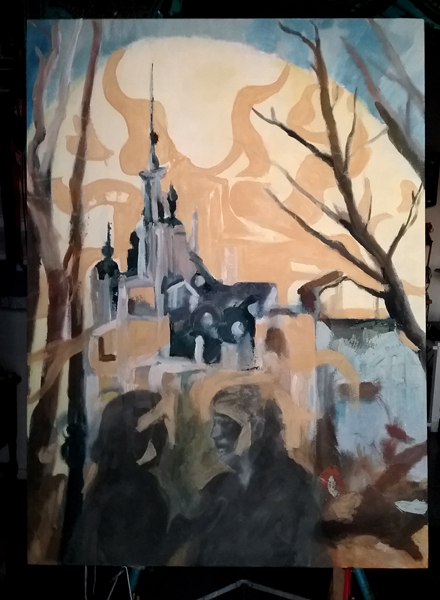
This is the under painting.
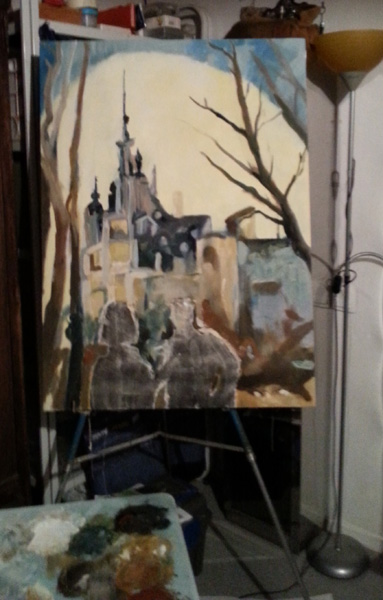
Canto IV describes a castle emanating a fire-like-light in limbo within a dark forest void of light.
I used gold leaf to represent the light.
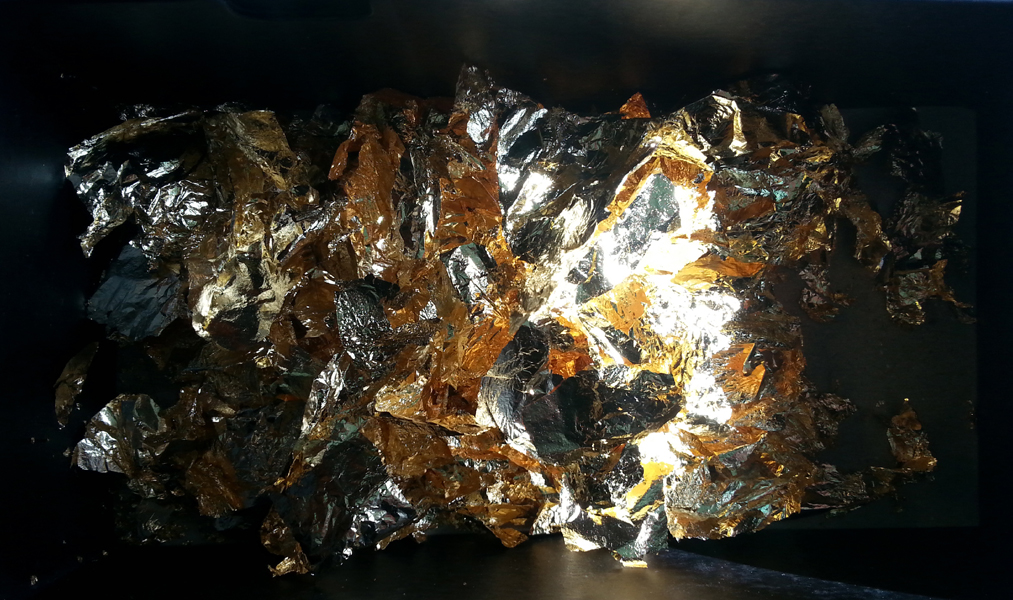
I paint the area where I want to put the gold leaf on because the canvas has to be sealed or the gold leaf won’t stick.

Here, I’ve just started to use oil color. I mixed dry pigment with poppy seed oil. When mixed, the paint should stand up like butter.

Resin oil is a mixture of stand oil, thickened linseed oil and venetian turpentine.
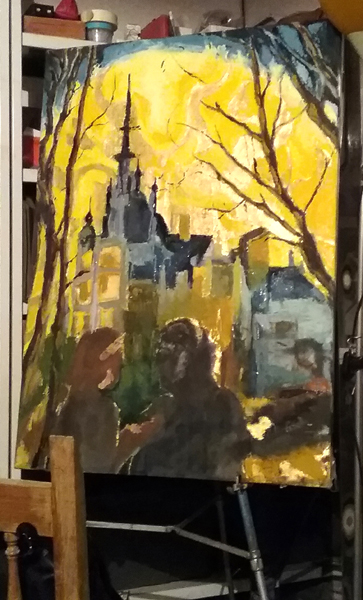
Session 7 resin oil
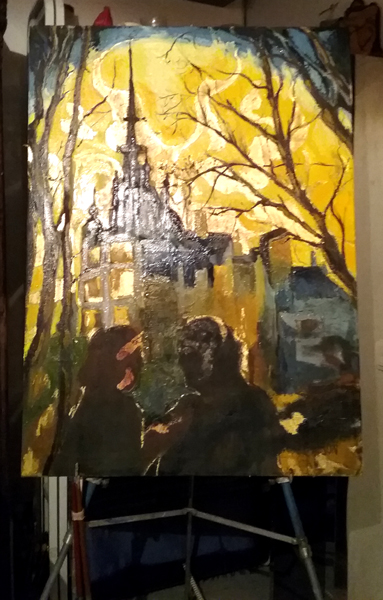
With wet resin oil, you can paint hair-line brush strokes into it with egg tempera and switch back and forth with tempera and oil. This is a mixed media. You must always follow the rule of fat over lean.
 Victoria Olson Art - Watercolor, Egg Tempera & Oil
Leave a comment